
Is your learning tech REALLY the problem?

Hi folks,
Before we dive in to todays topic, a quick word from this week’s sponsor, Sana.

If you’re about to go through an LMS replacement (or you’re stuck with one that’s not delivering), Sana Learn is worth a look. It’s an AI-powered learning platform that gives every learner a personal tutor, automates your admin, and so much more - all designed to help L&D teams move business metrics, not just learning metrics. After working with them for two years, I can tell you their team thinks like strategists, not vendors. That matters when you’re trying to solve the real problem, not just switch tools. Check them out here.
So, on to your learning tech stack. Is your learning tech REALLY the problem?
It’s one of the most common conversations I have with learning leaders.
It starts with a familiar frustration. An “itch to switch.”
“My LMS is clunky.”
“Nobody can find anything.”
“Adoption is terrible.”
“Our authoring tool is a nightmare.”
The conclusion feels obvious: the tool is the problem, and we need a new one.
So we brace ourselves for the RFP, the endless demos, the procurement headache, and the change management nightmare.
After 30 years in this game, I can tell you this with confidence: The tool is almost never the real problem.
It’s the symptom.
Switching your tech is one of the most expensive, disruptive, and high-risk things you can do. And if you don’t fix the real problem, you’ll just be importing the same old frustrations into a shiny new platform.
Before you get lost in a sea of demos, I want to offer a simple framework. This is the “clarity” I’m building The Learning Stack on. It’s about asking better questions before you write the check.
Step 1: Separate the Tool from the Process
The first thing we have to do is a simple diagnosis. Is the tool failing, or is the process we’ve built around it broken?
Be brutally honest.
You say: “Our team hates the authoring tool.”
Ask: Is the tool truly unusable, or do you have a 10-step review-and-approval process that makes any tool a bottleneck?
You say: “People can’t find anything in our LXP.”
Ask: Is the platform’s search algorithm the problem, or do you have zero content governance, no taxonomy, and three years of duplicated, untagged content?
You say: “Adoption is low.”
Ask: Is the user experience really that bad, or did we just send one email at launch and call it “change management”?
What if you gave your current, “broken” tool a full-service pit stop? Think fresh content governance, a real internal marketing plan, and a simplified process. Would it suddenly work a lot better?
Step 2: Find the Business Metric
Okay, let’s say you’ve done Step 1, and you’re still convinced the tool is the problem.
Now, we have to get out of our L&D bubble.
Too many tech decisions are based on learning metrics. “We want a tool with better social features,” or “We need to improve our 78% completion rate.”
Your CEO does not care about your completion rate.
You must tie this decision to an overarching business objective.
What is your C-suite actually trying to achieve this year?
Are they trying to reduce sales ramp-up time?
Are they trying to decrease customer support calls?
Are they trying to improve product-to-market speed?
Now, here is the million-dollar question:
“How, specifically, is our current tool preventing us from achieving that business objective?”
If you can’t draw a direct, dotted line from your LMS’s features to a core business metric, you aren’t ready to make a case for a change.
Step 3: Define the “After” Story
This is the final test. If you can’t answer this, stop.
I want you to paint a picture. It’s 12 months after you’ve launched your new, expensive platform. What, tangibly, is different?
And “people are more engaged” is not an answer.
Bad Answer: “Our learners will be happier, and engagement will go up.”
Good Answer: “Our sales team’s ‘time-to-first-deal’ will have dropped by 10% because the new platform delivers on-demand product info to their phones.”
Bad Answer: “We’ll have a better content library.”
Good Answer: “Our support team will update help articles in 2 days instead of 2 weeks because the new authoring tool is cloud-based and collaborative. This will reduce our ‘time-to-resolution’ for customer tickets.”
If your “after” story sounds vague, your strategy is vague. A new tool will not fix a vague strategy.
This is the real work. It’s not as exciting as watching a flashy demo, but it’s the strategic thinking I wish I’d had a partner for in my previous roles. This is the clarity I’m so excited to build and share through The Learning Stack.
So, I’m curious:
What’s a learning tool you’ve been tempted to “rip and replace,” and what was the real reason you wanted it gone?
Hit reply and let me know. I’d love to hear your story.
THE CURATION STACK
Here are a couple of other things that caught my eye this week:
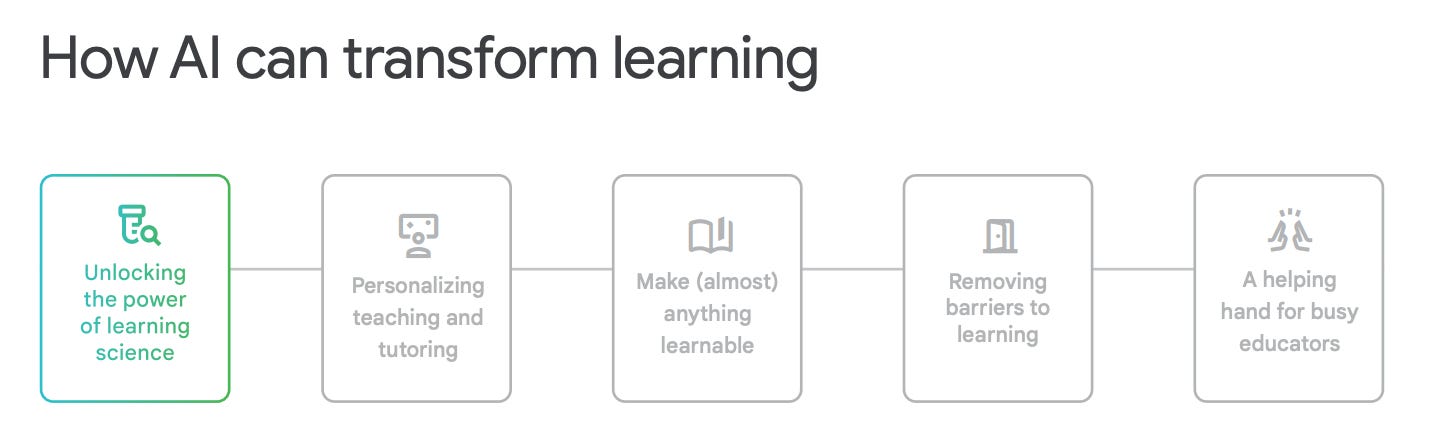
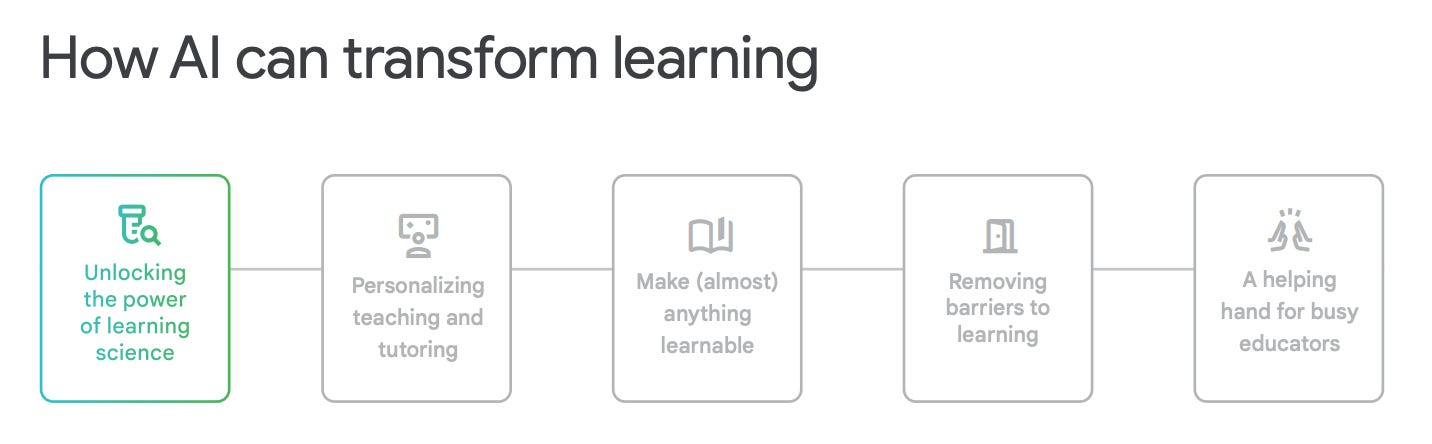
1. Google published their take on AI and the Future of Learning
This whitepaper from Google explores how AI is poised to start a new chapter for learning, not by replacing human elements, but by supporting educators and making learning more engaging and effective.
2. Gemini can now create pretty decent slide decks!
Josh Cavalier demonstrated the new Slide Deck capabilities in Gemini. I tried it myself with a single prompt and my internal “mission” document for The Learning Stack. My prompt:
I need to convert this to an external facing slide deck that explains who we are, what we do, how we do it, and our offerings.
You can check the output deck here - it’s exactly as it came out from Gemini.
All the best,
Mark
P.S. If you’re that leader wrestling with a big tech decision, this is what I’m here for. Send me a message and we can find a time to chat.
And if this email was forwarded to you, or you just came across it organically, subscribe here to get more practical advice for learning leaders.
This piece really made me think, and I completely get that initial 'itch to switch' when an LMS feels clunky – its so easy to blame the tool, but youre absolutely right that it's usually a symptom of a deeper systemic issue, which reminds me of your brilliant analysis on user adoption last month. Sana Learn sounds super interesting with the AI tutor concept; it really highlights how thinking like strategists, not just vendors, is crucial for real innovation that actually helps, not just replaces.